When you need carpenter ant control in NJ, you need more than a quick spray for the ants you can see. Carpenter ants can nest inside damp or damaged wood, move through wall voids, and expand into hidden areas of the home before the problem becomes obvious.
At Ace Walco Pest Control, we help homeowners throughout Central New Jersey, North Jersey, and Staten Island identify carpenter ant activity, treat the source of the infestation, and reduce the conditions that allow these wood-damaging pests to return. With more than 90 years of local experience, our team understands how carpenter ants behave in New Jersey homes and how to build a treatment plan around the structure, moisture conditions, and level of activity.
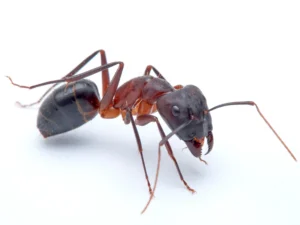
If you are seeing large black ants indoors, finding small piles of sawdust-like material, or noticing activity around windows, trim, basements, decks, or crawlspaces, professional residential pest control can help you determine whether carpenter ants are the problem.
Local Carpenter Ant Exterminators For New Jersey Homes
Carpenter ants are different from smaller nuisance ants that mainly search for crumbs, sugar, or moisture. They are wood-destroying insects that excavate galleries inside wood to create nesting space. They do not eat wood the way termites do, but their tunneling can still weaken structural materials over time.
New Jersey homes can be especially attractive to carpenter ants when there is moisture around the structure. Common risk areas include:
- Damp window frames
- Leaky door frames
- Basements and crawlspaces
- Decks, porches, and exterior steps
- Rooflines and soffits with moisture damage
- Firewood or wood debris stored near the home
- Tree branches or shrubs touching the structure
- Mulch beds piled against siding or foundation areas
Because carpenter ants often nest where moisture is already present, an infestation may also point to a hidden leak, drainage problem, or damaged wood condition. Our team looks for both the ants and the underlying factors that may be helping them survive.
Our Carpenter Ant Control Process
Effective pest control for carpenter ants starts with proper identification. Carpenter ants can be mistaken for other ant species, and winged carpenter ants are sometimes confused with termites. That is why our process begins with an inspection and a plan built around your property.
Inspection and Identification
We inspect the areas where carpenter ants are active, along with likely nesting zones, moisture sources, exterior entry points, and nearby wood conditions. This may include checking basements, crawlspaces, window frames, roofline areas, decks, porch supports, tree lines, and other locations where carpenter ants may travel or nest.
Correct identification matters because carpenter ants, termites, and nuisance ants require different treatment strategies. If there is concern that the issue may involve termites instead, we can also evaluate whether termite control is needed.
Customized Carpenter Ant Treatment Plan
After the inspection, we recommend a carpenter ant extermination plan based on the level of activity, nest location, property layout, and risk factors around the home. Some infestations are tied to a single nesting area, while others may involve satellite nests or repeated exterior pressure.
Your treatment plan may include interior service, exterior treatment, nest targeting, perimeter protection, and prevention recommendations. The goal is to treat the active colony while reducing the chances of carpenter ants returning.
Targeted Treatment Application
Our licensed technicians use targeted treatment methods designed for carpenter ant control New Jersey homeowners can rely on. Instead of broad, unnecessary spraying, we focus on active areas, travel paths, likely nest sites, and exterior pressure points.
Treatment may include materials designed to reach hidden colony activity, depending on what we find during the inspection. Your technician will explain the treatment approach, preparation needs, and any guidance for children or pets before service begins.
Follow-Up and Prevention
Carpenter ant control does not end with the first visit. Long-term prevention often depends on correcting the conditions that attracted the ants in the first place. We may recommend practical steps such as trimming branches away from the home, moving firewood, improving drainage, sealing entry points, reducing moisture, or repairing damaged wood.
For homes with recurring seasonal pest pressure, an ongoing pest control plan or year-round pest protection may help reduce future carpenter ant activity along with other common household pests.
Why Professional Pest Control for Carpenter Ants Matters
Professional pest control for carpenter ants matters because the visible ants are often only part of the infestation. Store-bought sprays may kill the workers you see, but they often fail to reach the nest or queen. In some cases, repellent products can cause the colony to shift activity or split into harder-to-find nesting areas.
A professional inspection helps answer the most important questions:
- Are these carpenter ants or another ant species?
- Are they nesting inside the home or foraging from outside?
- Is there damaged or moisture-affected wood nearby?
- Are there satellite nests in the structure?
- What treatment method is most likely to reach the source?
- What prevention steps are needed after treatment?
Ace Walco uses inspection-based recommendations, targeted service, and prevention guidance to help protect your home from active carpenter ant infestations and repeat activity.
Why Carpenter Ants are a Serious Wood-Destroying Pest
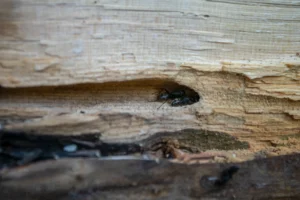
Carpenter ants do not consume wood as food. Instead, they hollow it out to create nesting galleries. These galleries are often smooth inside and may be found in damp or softened wood, although carpenter ants can expand into sound wood once a colony is established.
Signs of carpenter ant activity may include:
- Large black or dark-colored ants indoors
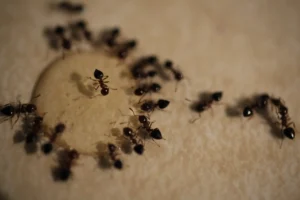
- Ant trails around windows, doors, decks, or foundation areas
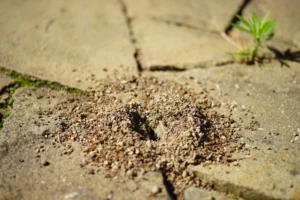
- Small piles of sawdust-like material called frass
- Faint rustling sounds inside walls or woodwork
- Winged ants appearing indoors during swarm season
- Activity near damp wood, leaks, or moisture-damaged areas
- Repeated ant sightings even after DIY treatment
Because carpenter ants may be active behind walls, under floors, or around exterior wood, the damage is not always easy to see. Early inspection can help limit the spread of the infestation and identify repairs or moisture corrections that may be needed.
Carpenter Ant Control for Homes, Businesses, and Rental Properties
Ace Walco provides carpenter ant control for homeowners, landlords, businesses, and property managers throughout our New Jersey service area. Whether you own a single-family home, rental property, restaurant, office, or commercial building, carpenter ant activity should be addressed before it spreads into additional wood or wall voids.
We offer service options for:
If you are responsible for a rental property or business, fast inspection and treatment can help reduce tenant complaints, protect the structure, and show that the issue is being handled professionally.
Carpenter Ant Control Across New Jersey and Staten Island
Ace Walco provides ant control New Jersey property owners can rely on across Central New Jersey, North Jersey, and nearby service areas. Our team serves customers through local branches and regional coverage areas, including:
You can also review our full list of New Jersey service areas to confirm availability near your home or business.
Why Choose Ace Walco For Carpenter Ant Control New Jersey Homeowners Trust
Ace Walco is a family-owned pest control company with more than 90 years of experience helping protect homes and businesses in New Jersey and Staten Island. Our technicians focus on practical inspection, clear communication, targeted treatment, and prevention steps that make sense for your property.
Customers choose Ace Walco because we offer:
- Local experience with New Jersey pest pressure
- Carpenter ant inspection and identification
- Targeted treatment plans for active infestations
- Prevention guidance for moisture and wood conditions
- Residential and commercial service options
- Same-day or next-day service when available
- Ongoing pest protection plans
- A long-standing reputation backed by customer reviews
If you are unsure whether you have carpenter ants, termites, or another pest issue, we can inspect the activity and recommend the right next step.
Schedule Carpenter Ant Control in New Jersey
Do not wait for carpenter ant damage to become more visible before taking action. If you are seeing large ants, winged ants, frass, or activity near damp wood, schedule an inspection with Ace Walco Pest Control.
Contact Ace Walco today or call 908-862-3660 to schedule carpenter ant control in NJ. Our team can inspect your property, explain what we find, and recommend a treatment plan built around your home or business.