cicada killer
  • Clients:

    Residential, Commercial

  • Category:

    Stinging & Biting

  • Services:

    ExclusionRemovalTreatments

  • Social NetWork:

Bee Removal

Bee Removal Services in New Jersey

Professional Bee and Stinging Insect Control for Homes and Businesses

Stinging insect behavior varies widely—yellow jackets conceal nests in wall voids, carpenter bees bore into exterior wood, and hornets build elevated paper nests. Ace Walco targets the exact species and nesting location on your residential or commercial property rather than applying broad outdoor sprays.

  • Residential Protection: Safe, precise removal near decks, patios, play areas, and entryways.
  • Commercial Services: Fast removal around outdoor seating, employee walkways, loading docks, and customer entrances.

Our family-owned team has served New Jersey since 1936. Rather than treating every flying insect the same way, we tailor our approach to the species, nesting location, property conditions, and the way you use the space.

Why Stinging Insects Invade Homes and Businesses

Stinging insects such as carpenter bees, wasps, yellow jackets, and hornets naturally nest outdoors in trees, shrubs, weeds, and the ground. However, as buildings and development continue disrupting their natural habitats, these insects are forced to seek new nesting sites. To reproduce and protect their colonies, they often establish nests in the sheltered spaces of homes and businesses, such as eaves, attics, wall voids, and underground burrows. This search for safe, secure environments makes your property an ideal target for infestation, increasing the risk of unwanted encounters.

Types of Stinging Insects We Treat

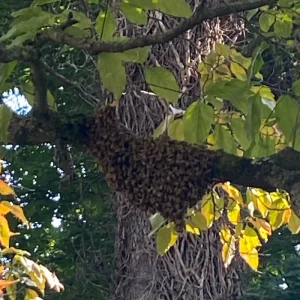
Not every insect people call a bee is actually a bee. Carpenter bees bore into exposed wood, some ground-nesting bees use bare or well-drained soil, and honey bees may gather in visible swarms. Wasps, yellow jackets, hornets, and cicada killers have different nesting behaviors and may react differently when their nesting areas are disturbed.

Correct identification helps determine the right next step. When honey bees are involved, we can also discuss whether a beekeeper or live relocation specialist may be more appropriate for the situation.

Carpenter Bees

Intimidating Invaders That Damage Exterior Wood

    • Nesting Habits: Wood structures, fascia boards, overhangs, and decks.
    • Identification: Large, bumblebee-like appearance.
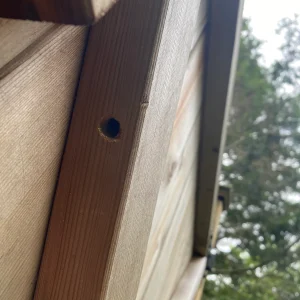
    • Risk: Bore entry holes and tunnels into softwood, causing cumulative structural damage.

Yellow Jackets

Hidden Dangers in Walls and Ceilings

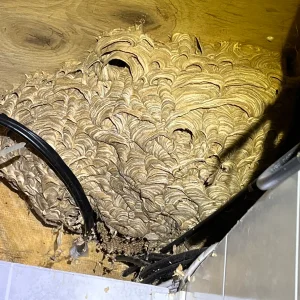
  • Nesting Habits: Concealed cavities inside walls, attics, ceilings, and underground voids.
  • Behavior: Highly aggressive with potential for large, defensive swarms.
  • Risk: Can chew through drywall to expand nesting space, creating indoor hazards.

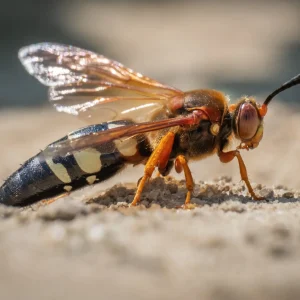
Cicada Killers

Ground-Nesting Giants

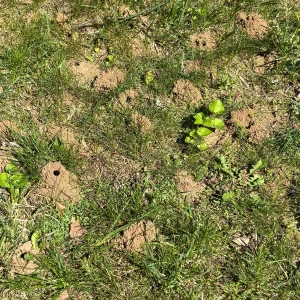
  • Nesting Habits: Dry, sparse lawns, dirt patches, and well-drained soil.
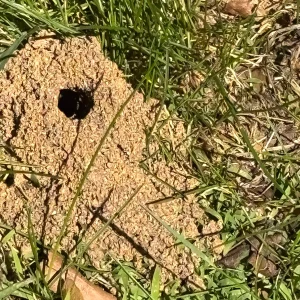
  • Behavior: Dig thumb-sized burrows to store paralyzed cicadas for their larvae.
  • Impact: Solitary in nature, but burrows create unsightly dirt mounds across landscaped yards.

Bald-Faced Hornets

Aggressive Aerial Nest Builders

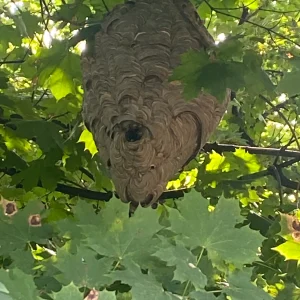
  • Nesting Habits: Exposed high-elevation areas, including tree branches, dense shrubs, and roof eaves.
  • Identification: Build large, gray, football-shaped paper nests.
  • Behavior: Extremely territorial and quick to sting repeatedly if approach limits are breached.

Ground Bees

Solitary Nest Builders That Target Lawns

  • Nesting Habits: Dig individual burrows in bare soil, sparse lawns, or well-drained dirt patches.
  • Behavior: Non-aggressive and solitary, though many females may build nests near one another in the same yard.
  • Impact: Leave scattered dirt mounds across turfgrass, disrupting landscaping and lawn maintenance.

Wasps

Nesting in Protected Exterior Spaces

  • Nesting Habits: Construct honeycomb-like paper nests under roof eaves, porch overhangs, and decks.
  • Types & Trait: Paper wasps gather near water sources like pools, while mud daubers build distinct tube-like mud structures on exterior walls.
  • Risk: Frequently build nests close to human activity and entryways, increasing sting hazards.

European Hornets

Nesting in High, Hidden Cavities

  • Nesting Habits: Prefer elevated, concealed spaces like upper roof eaves, attic gaps, and hollow tree cavities.
  • Identification: Exceptionally large stinging insects with a distinct deep, loud buzzing sound in flight.
  • Risk: Construct large colonies inside structural voids, creating persistent threats to upper-level living areas.

Ace Walco’s Stinging Insect Control Procedures

Safe, Effective, and Customized for Each Species

  • Comprehensive Inspection and Identification

    At Ace Walco, we start with a detailed inspection of your property to locate nests and accurately identify the species of stinging insects, including bees, wasps, carpenter bees, and hornets. Our experienced team uses advanced tools and techniques to assess the severity of the infestation and determine the safest and most effective treatment approach.

  • Tailored Treatment Plan

    After a thorough inspection, we develop a customized treatment plan for your property. This personalized approach ensures maximum effectiveness in eliminating stinging insect nests and preventing their return.

  • Targeted Treatment Application

    Our licensed technicians apply precision-targeted treatments to eliminate active nests and colonies while minimizing disruption to your property. We also implement programs that will cover these pests in the future.

  • Ongoing Follow-Up & Prevention

    Ace Walco provides continuous support and expert prevention tips to keep stinging insects from returning. Our follow-up inspections and proactive maintenance measures offer lasting protection and peace of mind.

  • Signs You May Need Bee Removal in New Jersey

    Bee or stinging insect activity does not always mean there is a nest on the property, but repeated activity in one location can be a reason to schedule an inspection.

    Common signs of nearby nesting include:

    • Repeated insect traffic into the same opening
    • Buzzing around soffits, siding, rooflines, or wall gaps
    • Clusters of bees or wasps near an entryway
    • Round holes in exposed wood
    • Wood shavings beneath railings, decks, or trim
    • Persistent activity around a ground opening
    • A visible paper nest beneath an eave or in a tree or shrub
    • Repeated activity near outdoor seating, play areas, walkways, or customer entrances

    Professional help can be especially useful when the nesting area is close to doors, patios, play spaces, outdoor dining areas, customer entrances, or other frequently used parts of the property.

    Avoid plugging an active opening, knocking down a nest, or treating an area before the insect and nesting location have been properly assessed. Disturbing an active colony can increase defensive activity or cause insects using a structural void to seek another exit.

    How Professional Bee Removal Works

    We begin by asking where you have seen activity, how long it has been present, and whether you have identified a visible nest or entry point. During the inspection, we may look at:
    • Rooflines and soffits
    • Eaves and fascia boards
    • Decks, porches, and railings
    • Siding and wall openings
    • Trees and shrubs
    • Landscape beds and ground openings
    • Sheds and detached structures
    • Utility penetrations
    • Outdoor seating and gathering areas
    • Business entrances, loading areas, and customer spaces
    We look at the insect’s appearance, nesting behavior, flight pattern, and location before recommending treatment. Once we understand the problem, we explain the treatment options and any precautions or follow-up that may apply. An exposed wasp nest may require a different approach than yellow jackets entering a wall void, carpenter bees tunneling into fascia, or ground-nesting insects using a lawn. Our goal is to address the active nesting area without applying unnecessary treatment elsewhere on the property.

    Why Choose Ace Walco for Bee & Stinging Insect Control?

    Ace Walco Pest Control is a family-owned New Jersey pest control company that has served local homes and businesses since 1936.

    Our 90 years of local experience have given us firsthand familiarity with the stinging insects found around Central and North Jersey properties, from carpenter bees nesting in exterior wood to yellow jackets using structural gaps and ground cavities.

    We do not use one treatment for every stinging insect problem. Our technicians take the time to:

    • Identify the insect
    • Locate visible or suspected nesting areas
    • Evaluate access and nearby occupied spaces
    • Explain the recommended treatment
    • Clarify any preparation or temporary access precautions
    • Separate pest-control work from structural repairs
    • Provide practical prevention guidance when appropriate

    We want you to understand what we found and what should happen next before service begins.

    Seasonal Bee & Stinging Insect Activity in New Jersey

    Stinging insect activity changes throughout the year. Spring often brings increased carpenter bee activity around exposed wood as adults return to nesting areas. Wasps and hornets become more noticeable as colonies develop through the warmer months, while yellow jacket activity can become especially noticeable later in summer and into early fall as colonies grow. Mature trees, decks, sheds, roof overhangs, exposed wood, landscaped beds, retaining walls, ground cavities, and older structural openings can all provide possible nesting locations. The right recommendation depends on the insect and property rather than the season alone, which is why we start with identification and inspection.  
    Insect Type Peak Activity Period Nesting / Activity Highlights Primary Risk Level
    Carpenter Bees Spring (April – June) Adults emerge to bore entry holes into exposed wood, decks, and soffits. Moderate (Structural Wood Damage)
    Ground Bees Spring (April – May) Build burrows in bare soil and turfgrass; activity dissipates by early summer. Low (Non-Aggressive / Turf Disruption)
    Wasps & Mud Daubers Late Spring – Summer (May – August) Construct paper honeycomb or mud tube nests under eaves, porches, and decks. Moderate (Sting Hazard near Entryways)
    Cicada Killers Mid-to-Late Summer (July – August) Solitary giants dig large burrows in sparse lawns to store prey. Low–Moderate (Intimidating / Dirt Mounds)
    European Hornets Summer – Early Fall (June – September) Establish large colonies in hollow trees and elevated structural voids. High (Large Swarms / Structural Voids)
    Bald-Faced Hornets Summer – Fall (July – October) Build high-elevation, gray paper nests; aggressive defensive behavior. High (Severe Defensive Stings)
    Yellow Jackets Late Summer – Fall (August – October) Populations peak; colonies aggressively seek sugar and protein near human activity. Very High (Aggressive / Wall Voids & Ground)

    Carpenter Bee Prevention Tips from Ace Walco

    1. Seal and Paint Exposed Wood

      Seal and Paint Exposed Wood Carpenter bees prefer untreated or weathered wood for nesting. To make exposed wood surfaces, including decks, fences, and eaves, less attractive to bees, apply high-quality exterior paint or varnish.

    2. Fill Existing Holes

      Inspect your property for existing carpenter bee holes and fill them with wood putty or caulk. Sand the area smooth and apply a coat of paint or stain to seal it properly.

    3. Install Protective Screens or Netting

      Cover vulnerable wood surfaces, such as soffits and eaves, with fine mesh screens or wire netting to prevent bees from accessing and drilling into the wood.

    4. Use Citrus or Almond Oil Repellents

      Cover vulnerable wood surfaces, such as soffits and eaves, with fine mesh screens or wire netting to prevent bees from accessing and drilling into the wood.

    5. Install Vinyl or Aluminum Trim

      Consider using vinyl or aluminum trim around wood structures, as these materials are less appealing to carpenter bees. This provides long-term protection against infestations.

    6. Limit Softwood Use in Construction

      Carpenter bees prefer softwoods like cedar and pine. Opt for hardwoods or treated lumber when building decks, sheds, or other wooden structures.

    7. Maintain Wooden Structures Regularly

      Perform routine inspections and maintenance on decks, fences, and wooden siding to identify early signs of carpenter bee activity and prevent future damage.

    8. Hang Bee Traps

      Strategically place carpenter bee traps near areas where bee activity is common. These traps attract and capture bees before they can cause damage.

    9. Close Gaps and Openings

      Seal gaps or cracks in wooden structures where carpenter bees might enter. Use caulk or expanding foam to block potential nesting spots.

    10. Schedule Professional Inspections

      Regular inspections by a pest control professional can identify early signs of carpenter bee activity and prevent costly structural damage.

    Don’t Let Stinging Insects Take Over Your Yard or Home

    Schedule a Free Bee Removal Inspection

    Ace Walco provides bee and stinging insect control for homeowners and businesses throughout Central and North Jersey and Staten Island. Our service area includes communities around Wayne, Princeton, Randolph, Linden, Neptune, and other locations served by our local New Jersey branches.

    Ace Walco also provides comprehensive pest services in NJ, helping homeowners protect their properties from stinging insects and other common pests throughout the year.

    Request a Free Nest Inspection
    Previous Post

    Yellow Jacket Exterminator

    Next Post

    Cockroach Exterminator