Rely on Ace Walco for Expert NJ Carpenter Bee Removal
Carpenter bees can turn exposed wood around a home or business into a nesting site. Their tunnels may leave smooth entrance holes, coarse wood shavings, staining, and recurring bee activity around decks, eaves, fascia boards, railings, sheds, pergolas, and other wooden features.
Ace Walco provides carpenter bee pest control in New Jersey through a free, in-person inspection. We identify active nesting areas, evaluate the accessible wood, and recommend treatment based on the number and location of the tunnels.
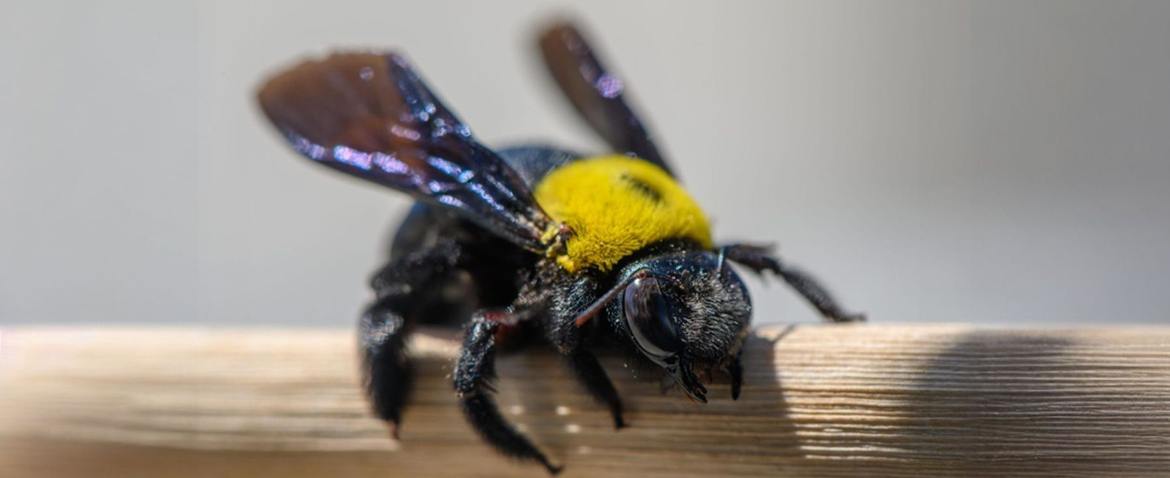
Carpenter bees are often mistaken for bumblebees, but their nesting behavior is different. Bumblebees usually live in social colonies, while carpenter bees create individual tunnels in wood where females lay their eggs.
One season of nesting may leave limited cosmetic damage. When carpenter bees return to the same boards year after year, tunnels may expand and overlap. The affected wood can also become more vulnerable to moisture, decay, and damage from woodpeckers searching for bee larvae.
We recognize that every pest problem and property is unique. That’s why we consider the following:
- Whether the tunnels appear active
- The type and condition of the wood
- The number and location of visible holes
- The height and accessibility of the nesting areas
- Previous repairs or treatments
- Other wooden features that may be vulnerable
After the inspection, we explain what we found and which steps relate to active carpenter bee treatment, tunnel repair, and longer-term wood maintenance.
Carpenter Bee Control for Homes and Businesses
Carpenter bees commonly nest in exposed, unfinished, or weathered wood. Areas that may provide suitable nesting locations include:
- Porch ceilings
- Deck joists and railings
- Pergolas
- Fence posts
- Window and door trim
- Roof overhangs
- Fascia boards
- Wooden siding
- Sheds and barns
- Play structures
- Outdoor furniture
Activity is often most noticeable in spring, when adult carpenter bees emerge or return to familiar nesting areas. Properties with extensive exterior woodwork may experience new holes near older tunnels.
Businesses and managed properties can face similar concerns. Carpenter bees may hover or nest around wooden canopies, storefront trim, outdoor dining structures, covered walkways, maintenance buildings, recreational facilities, and shared outdoor areas.
Even when the bees are not actively stinging, repeated hovering near entrances or customer areas can concern employees, visitors, tenants, and guests. Our commercial carpenter bee control recommendations account for how the space is used, when it is occupied, and how accessible the nesting areas are.
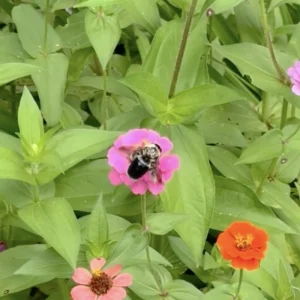
Carpenter bees are pollinators, so treatment should focus on the confirmed nesting problem. We target active tunnels and relevant surfaces rather than treating the entire property without first identifying where the bees are nesting.
Signs of a Carpenter Bee Infestation
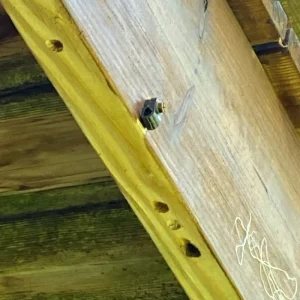
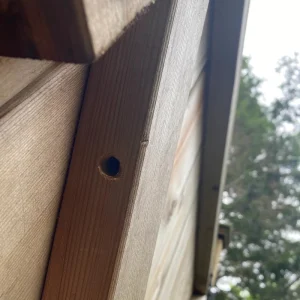
The clearest sign of carpenter bee nesting is a smooth, round entrance hole in wood, often roughly one-half inch in diameter. The opening may lead into a tunnel that turns and follows the grain of the board.
Other signs may include:
- Coarse wood shavings beneath an opening
- Yellowish or brown staining below a tunnel
- Large bees returning to the same piece of wood
- Buzzing or faint movement inside a board
- Several holes along the same deck, railing, or roofline
- Woodpecker damage around a nesting area
- New holes near older repairs
Male carpenter bees often hover near nesting sites and may fly toward people who enter the area. Males cannot sting, but their territorial behavior can still feel intimidating. Females can sting when handled or seriously disturbed, so active tunnels should not be approached or probed.
Carpenter bees can resemble bumblebees, while their hovering behavior may also be confused with wasps or other flying insects. A professional inspection can confirm the pest before treatment is recommended.
You can also review our guide on how to identify carpenter bees for additional information about their appearance, nesting habits, and wood damage.
When to Call a Carpenter Bee Exterminator
Professional carpenter bee removal may be appropriate when:
- Several holes appear in the same board
- Fresh wood shavings continue to collect below openings
- Bees return to a previously treated or repaired area
- Tunnels are located high above the ground
- Nesting occurs near a doorway, patio, play area, or walkway
- Bees are hovering around a business entrance or customer area
- Woodpeckers are enlarging the holes
- The affected wood shows signs of moisture or deterioration
- You cannot determine whether the holes are active
Do not automatically seal a visible tunnel while bees may still be inside. Closing an active opening too early may cause a bee to create another exit or leave untreated nesting chambers within the wood.
Our technicians inspect the area first and explain when treatment should occur, when confirmed inactive openings may be sealed, and whether damaged wood should be evaluated by an appropriate repair professional.
How Carpenter Bee Treatment Works
Our carpenter bee treatment process begins with a conversation about where bees have been seen and when the activity began.
During the inspection, we may examine:
- Eaves and fascia boards
- Decks, porches, and railings
- Window and door trim
- Sheds, fences, and pergolas
- Wooden siding and roof overhangs
- Older holes and repaired areas
- Wood shavings, staining, and flight paths
- Damage enlarged by birds or moisture
After identifying likely active nesting areas, we recommend a targeted treatment plan. Depending on the property, service may include treating accessible tunnels and relevant areas around confirmed nesting sites according to product-label directions.
We avoid treating unrelated outdoor areas simply because bees are present nearby. The focus remains on the nesting locations and the conditions associated with the carpenter bee problem.
After active nesting has been addressed, we explain when inactive holes may be sealed and which repairs or finishes may help make the wood less attractive in the future. Properties with recurring seasonal nesting may require continued monitoring and timely exterior maintenance.
How Much Does Carpenter Bee Pest Control Cost?
The cost of carpenter bee pest control depends on the scope and accessibility of the nesting problem. A small number of accessible tunnels beneath a porch will not require the same service plan as widespread nesting around multiple rooflines, decks, buildings, or elevations.
Pricing may be affected by:
- The number of active or suspected tunnels
- The height of the nesting areas
- Ladder or lift access
- The amount of exposed wood
- The number of structures involved
- Previous repairs or treatments
- The condition of the affected boards
- Whether follow-up service is recommended
A free inspection allows us to evaluate the visible nesting areas and explain the recommended treatment. In some cases, additional access planning may be needed before the full scope or final price can be confirmed.
What Affects Carpenter Bee Treatment Costs?
Pest treatment and structural repair are separate types of work. Ace Walco can address the active carpenter bee concern and explain when tunnel closure may be appropriate.
Painting, staining, carpentry, board replacement, or extensive wood restoration may need to be completed separately by the property owner or a qualified contractor. We clearly distinguish between recommendations related to pest treatment and those related to longer-term property maintenance.
Carpenter Bees vs. Other Wood-Damaging and Stinging Pests
Carpenter bees require a different approach from social bees, wasps, yellow jackets, and hornets. They usually create individual tunnels in wood rather than building a large social nest.
Ace Walco’s broader bee and stinging insect control services cover carpenter bees as well as:
- Ground bees
- Cicada killer wasps
- Paper wasps
- Yellow jackets
- Bald-faced hornets
- European hornets
- Other stinging insects
Correct identification matters because each pest nests differently and may require a different treatment method.
Carpenter bee damage can also be confused with evidence from termites, carpenter ants, or other wood-damaging pests. Carpenter bees create distinct round openings and excavated tunnels. Termites usually remain concealed and consume cellulose, while carpenter ants excavate galleries in wood without eating it.
When the evidence is unclear, we can determine whether carpenter bee treatment, termite inspection and control, carpenter ant control, or another service should be considered.
How to Help Prevent Carpenter Bees From Returning
Carpenter bees are often attracted to exposed, unfinished, or weathered wood. After active tunnels have been treated and confirmed inactive, appropriate maintenance may help reduce future nesting.
Recommendations may include:
- Sealing inactive tunnel openings at the appropriate time
- Painting or finishing exposed wood
- Repairing cracks and damaged board ends
- Replacing severely deteriorated wood
- Maintaining fascia, trim, railings, and deck components
- Covering vulnerable wood with suitable finished materials
- Monitoring areas where bees have nested previously
Painted surfaces are generally less attractive to carpenter bees than bare or weathered wood. Stain may provide some protection, but a complete painted finish is often a stronger deterrent when appropriate for the material and structure.
Repairs should be based on the location and condition of the wood. Sealing visible holes without addressing active tunnels or nearby nesting areas may not resolve the problem.
Why Choose Ace Walco for Carpenter Bee Control?
Ace Walco is a third-generation, family-owned pest control company that has been serving New Jersey since 1936. Our local experience includes the seasonal pest patterns, building styles, wooded properties, and weather exposure found across Central and North Jersey.
Carpenter bee service involves more than treating the bees visible during the inspection. Property owners may also be concerned about recurring holes, damaged wood, nesting near gathering areas, and whether previous repairs were completed at the right time.
Our technicians take time to:
- Identify the pest
- Locate accessible nesting areas
- Distinguish older holes from current activity
- Explain the recommended treatment
- Separate pest-control work from wood repairs
- Provide practical prevention guidance
Clear Recommendations Without Unnecessary Treatment
We want carpenter bee pest control to feel straightforward. Our team explains where treatment is recommended, what the service is intended to address, and which maintenance steps may help afterward.
We can also discuss service around children, pets, tenants, employees, customers, entrances, and outdoor living areas. Any temporary access restrictions or preparation requirements will be based on the treatment, application area, and product label.
Customers who need broader recurring coverage can also review Ace Walco’s year-round pest protection options. Carpenter bee coverage and any pest-specific limitations should be confirmed when selecting a plan.
Carpenter Bee Control Across New Jersey and Staten Island
Ace Walco provides pest control through six New Jersey branches and serves properties across 14 New Jersey counties and Staten Island. Review our complete list of New Jersey pest control service areas or contact our team to confirm availability at your address.
Our carpenter bee service footprint includes areas served by:
Homes and commercial properties around Wayne and North Jersey may have decorative trim, decks, fascia boards, roof overhangs, and other exposed wooden features that carpenter bees can use for nesting.
Properties around Princeton and Central Jersey often include porches, pergolas, barns, fences, and substantial exterior woodwork. Treatment recommendations are based on the nesting locations and structure.
Our Randolph-area service supports homes and businesses with carpenter bee nesting around decks, sheds, rooflines, trim, and landscaped outdoor spaces.
Moisture, sun, salt air, and changing coastal weather can affect exterior finishes and wood maintenance. Our Neptune-area team evaluates the active nesting sites and the condition of accessible surrounding wood.
Schedule a Free Carpenter Bee Inspection
Carpenter bees may return to familiar nesting areas and continue expanding tunnels in exposed wood. An inspection can help determine which holes appear active, where treatment is needed, and what maintenance may reduce future nesting.
Schedule a free carpenter bee inspection with Ace Walco Pest Control. Our local team will inspect the accessible areas, explain what we find, and recommend a treatment plan for your New Jersey home or business.
Request a Free Nest Inspection